Sports and Healing
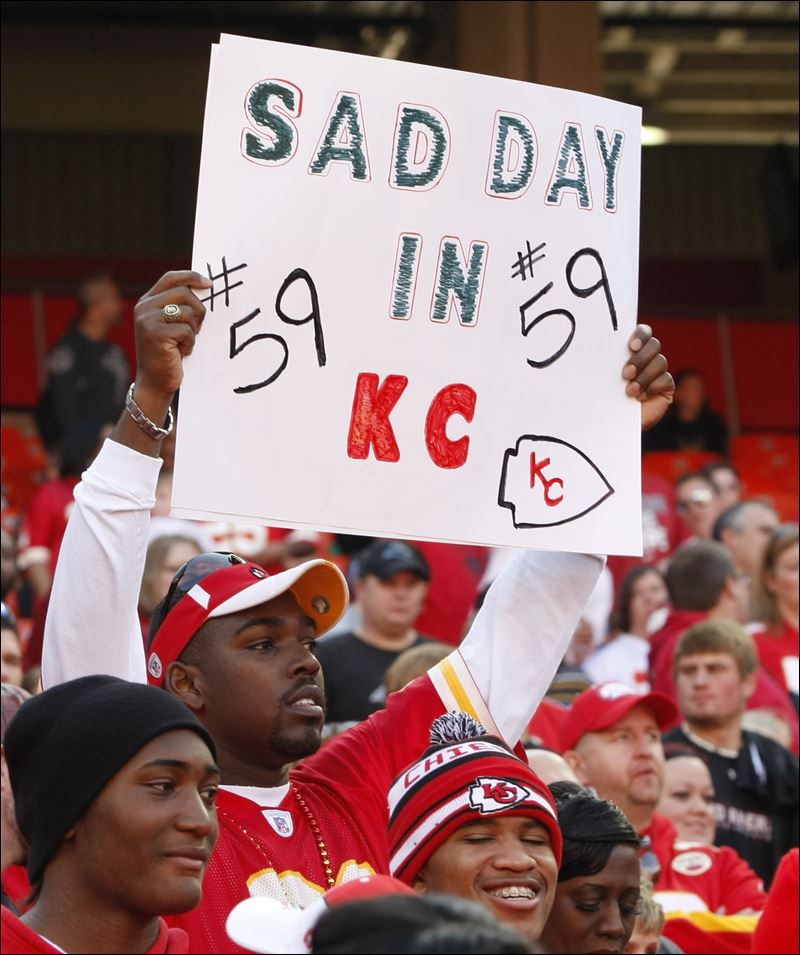
Sports can have a way of healing things. They serve as a constant in people's lives, the one object that will always be available for discussion, for yelling at, and for cheering for. They can distract when distraction is needed, and can give a town something to huddle around in dire times. Sports can be a source of comfort in the wake of a tragedy, for both the fans and players. And that is why the Kansas City Chiefs' decision to play on Sunday afternoon, despite the franchise-shaking murder-suicide that took place at their stadium the day before, is the right one.
It's unclear why Jovan Belcher did what he did. There was no sign of a troubled mind, no indication of unrest. Family friends described him as "friendly, a good guy... someone you wanted to be around." His agent, Joe Linta, pinned him as "charitable and humble." So when Belcher shot his girlfriend on Saturday morning, then drove to Arrowhead Stadium to kill himself in front of coaches, the tragedy struck home harder. The excess of questions left unanswered in the incident will undoubtedly make the healing process more difficult, and keep the wounds open longer. When there is no explanation for bloodshed, it feels that much more bloody. And because of this, the sentiment that the Chiefs should not play Sunday against the Panthers is one that is surely floating through not just Kansas City, but the entire country. And on the surface, that argument is the right one. The deaths that took place eclipsed the uneclipsable NFL, and in the wake of them, football seems to have no place. But that's where the argument fails.
 |
NOTE: The Chiefs decided to play, and won 27-21. Coach Romeo Crennell: "As far as playing the game, I thought that was the best for us to do, because that's what we do. We're football players and football coaches and that's what we do, we play on Sunday."

No comments:
Post a Comment